Where to eat in every town, the dishes you can’t leave without trying, when lobster and conch are in season, and the cultures behind the flavors. Come hungry.
Our five-star spotlight on one of Caye Caulker’s most-loved dockside kitchens.
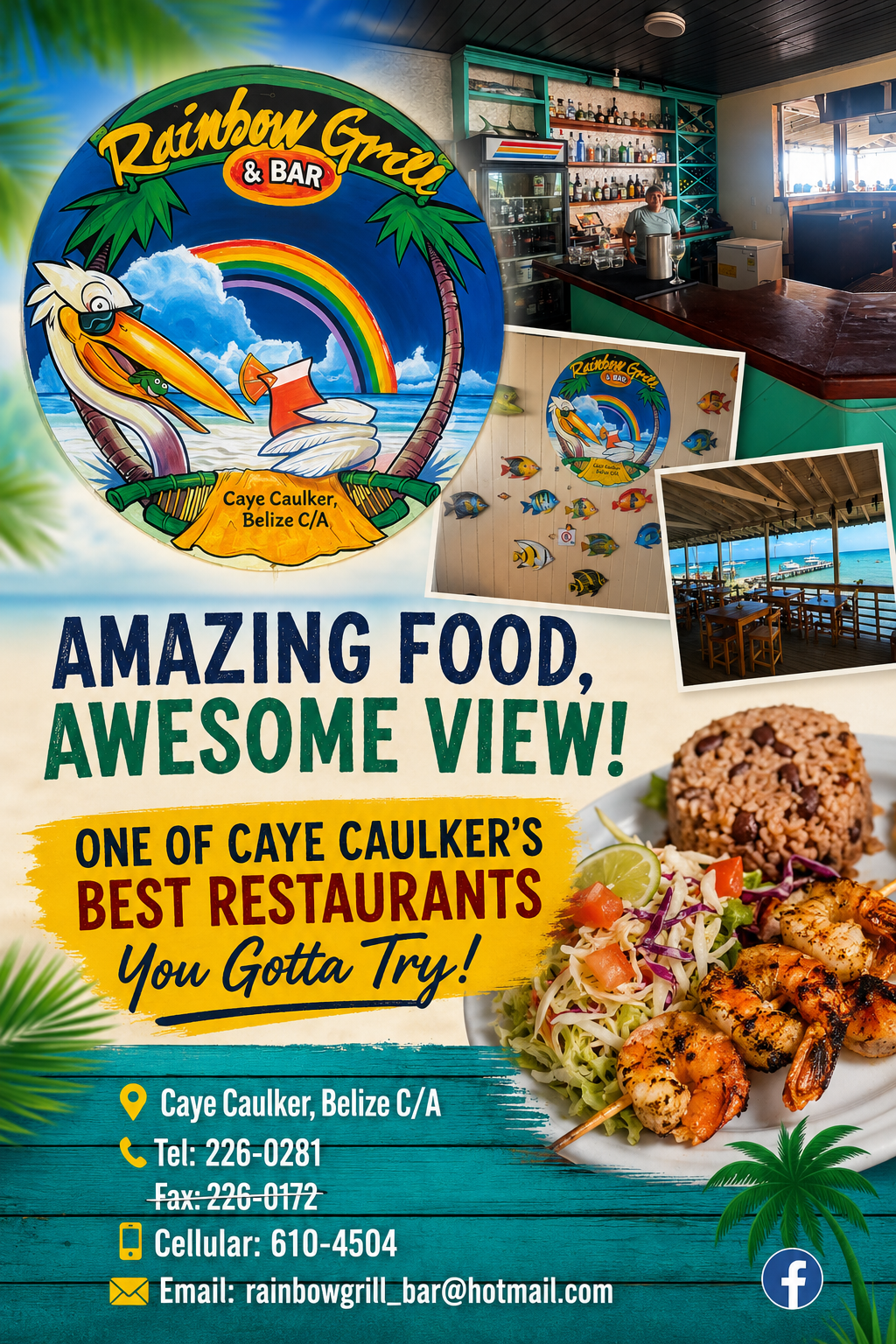
There is a certain kind of meal that only makes sense with your feet near the water, a cold drink sweating on the table, and the reef breeze doing half the work of relaxing you. Rainbow Grill & Bar was built for exactly that meal. Perched over the water on Caye Caulker — the island whose unofficial motto is “go slow” — it delivers on a promise its own signboard makes plainly: amazing food, awesome view.
What lands on the plate is Belizean island cooking at its most honest. Skewers of shrimp come off the grill charred at the edges and still juicy in the middle, plated beside a tidy dome of coconut rice and beans, a bright cabbage-and-tomato slaw, and a wedge of lime to pull it all together. It is the sort of plate you find yourself thinking about days later — unfussy, generous, and cooked by people who clearly do it every day and do it well. Fresh catch, grilled seafood, and Caribbean staples anchor a menu that rewards ordering whatever came in that morning.
The setting is as much the point as the food. Rainbow Grill sits out over the sea, so you eat with boats bobbing at the dock and the Caribbean stretching flat and impossibly blue toward the barrier reef. The dining room carries the same easy, hand-painted color as the island itself — turquoise trim, tropical fish on the walls, and a bar stocked for slow afternoons that turn into slower evenings. It is the kind of place where a quick lunch quietly becomes a two-hour one, and nobody minds. That is not a flaw in the service; that is the whole idea of Caye Caulker, distilled onto a wooden deck.
For travelers building a Caye Caulker eating list, Rainbow Grill earns its spot for the combination that’s genuinely hard to beat: fresh, well-grilled seafood at fair island prices, in a waterfront seat you’ll want to photograph before you touch your fork. It pairs naturally with the island’s other must-dos — a swim at The Split, an early fry-jack breakfast, an afternoon snorkel — and makes a strong case as the sit-down dinner that anchors the day. Come with an appetite for grilled shrimp, whole fish, or lobster in season, order a cold Belikin, and give yourself no agenda for the next couple of hours.
If you’re only on the island for a day or two, this is an easy recommendation. Get there a little before sunset, claim a table near the rail, and let the view and the grill do what they’ve been doing for years. It’s a five-star experience in the most Caye Caulker way possible — excellent food, zero pretense, and a view that reminds you exactly why you came to Belize.
Belize is a small country with an outsized table. In a single day you can eat Mestizo salbutes cooked over an open hearth in San Pedro, slurp conch ceviche on a Caye Caulker dock, and finish with a Garifuna coconut fish stew that has been simmering since morning in a Hopkins kitchen. The food here is the product of six cultures that learned to cook side by side — Creole, Garifuna, Mestizo, Maya, Chinese, and East Indian — each bringing its own staples, and all of them borrowing happily from the others.
This guide is built to help you eat well everywhere you go. We’ll walk you through the best food towns and what to order in each, the dishes that define Belizean cooking, when lobster and conch are actually in season, and the small rules of the table that make eating here easier. There’s also an interactive food bucket list so you can check off the dishes as you conquer them. Whether you’re planning a week on the cayes or a slow loop through the mainland, the goal is simple: no wasted meals.
Tap a town to see what it’s known for — then jump straight to the picks. Four food towns, one reef-lined coast.
The country’s busiest food town — waterfront splurges, mid-street value, and back-street local kitchens across ten walkable blocks.
See the picks →Barefoot seafood grills, famous fry jacks, and beachfront breakfast — home to our 5-star pick, Rainbow Grill & Bar.
See the picks →A famous sidewalk of restaurants and beach bars, plus some of the country’s most awarded kitchens up at Maya Beach.
See the picks →The heartland of Garifuna cooking — coconut, plantain, and cassava, with hudut simmered by hand and meals that come with drumming.
See the picks →Each destination has its own flavor and its own short list of places worth your appetite.
Belize’s busiest food town, packed into ten walkable blocks across Front, Middle, and Back Streets — waterfront splurges, mid-street value, and back-street local gems.
Barefoot, reggae-soundtracked, and built for grazing. Fresh seafood grills, famous fry jacks, and beachfront breakfast under the palms.
A narrow peninsula with a famous sidewalk lined with restaurants and beach bars, plus some of the country’s most awarded kitchens up at Maya Beach.
The heartland of Garifuna cooking, where coconut, plantain, and cassava are center stage and meals often come with drumming.
Heads up: many island spots are cash only (Belize dollars or US, always 2:1), and the best local kitchens sometimes close one day a week — check before you go.

San Pedro packs the densest dining in the country into a handful of walkable blocks. Front Street runs the waterfront splurges, the middle streets hold reliable mid-range plates, and the back streets hide the local kitchens where Belizeans actually eat.
Spend an evening drifting from one to the next — ceviche and a cold Belikin at a beachfront table, then a plate of stew chicken and rice and beans a block inland — and you’ll understand why so many trips to Belize are really planned around the next meal.
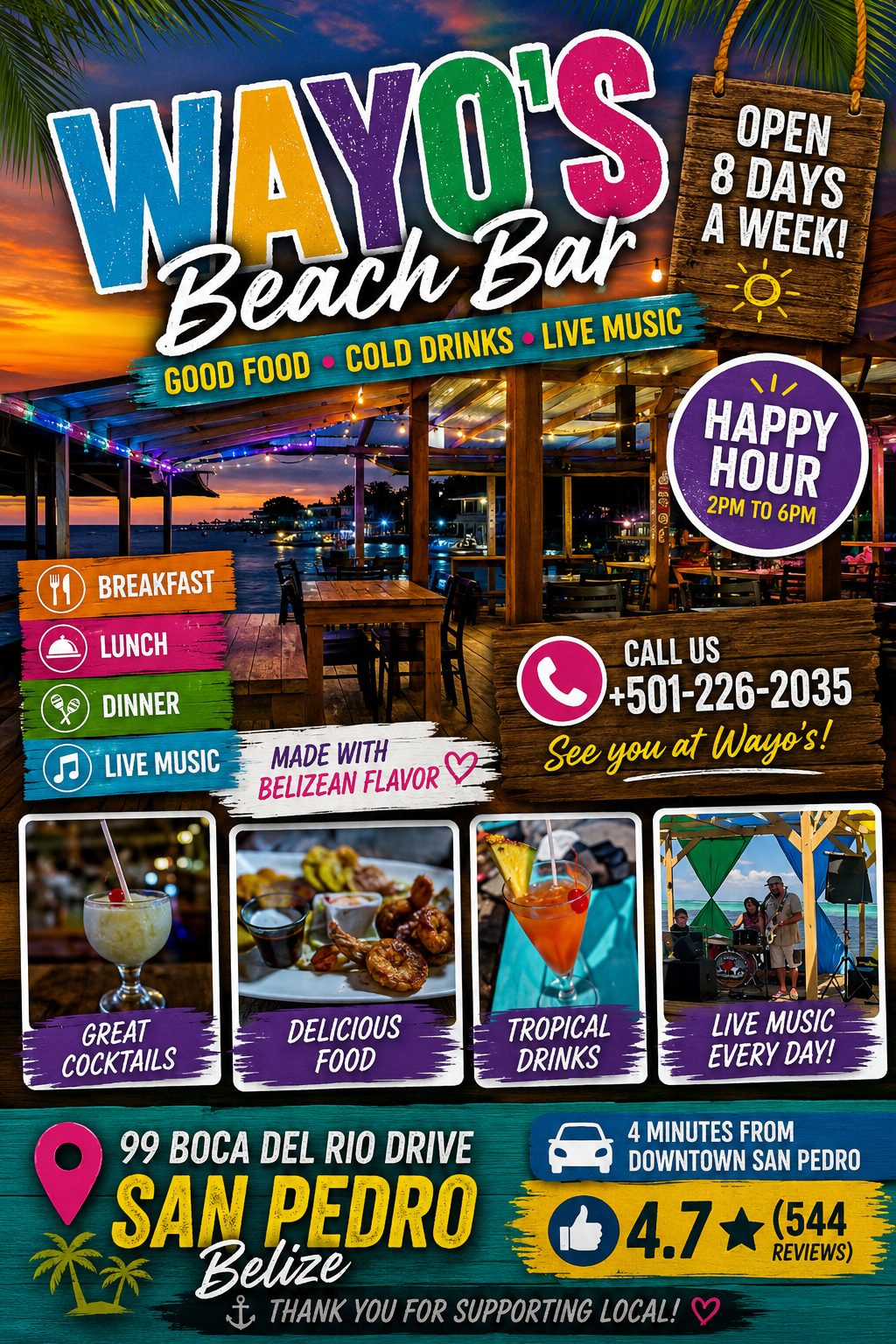
No trip to Belize is complete without at least one long, lazy afternoon at a beach bar — a cold Belikin in hand, grilled catch on the way, and the Caribbean a few steps from your table. The islands and the Placencia peninsula are lined with them.
Order the fresh ceviche, watch the boats come in, and let the sunset stretch dinner into the evening. It’s the most Belizean way to eat: unhurried, salty-aired, and impossible to rush.
Tap each dish as you try it. Watch your taste-of-Belize meter fill up. (Saves while you browse — screenshot it to keep score on your trip.)
Tap a dish below to begin your Belize food journey.
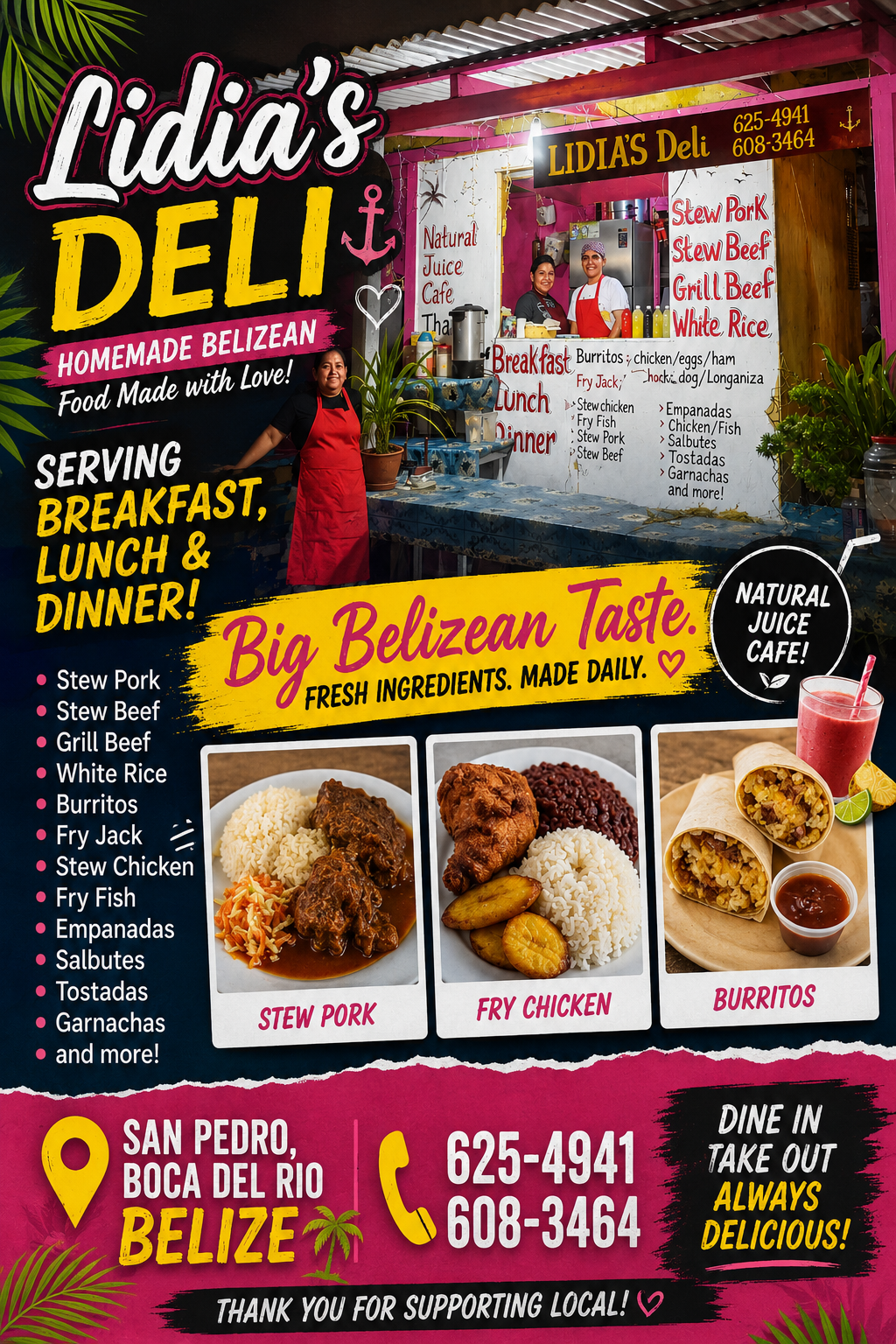
Some of the best-value, best-tasting food in Belize never comes with a menu. Roadside carts and market stalls turn out salbutes, garnaches, panades, and tacos for a few dollars — hot, fresh, and gone in a couple of bites.
Follow the crowd of locals at lunchtime, order what they’re ordering, and keep small bills handy. It’s the fastest way to eat your way into how San Pedro really tastes.
More Belize restaurants are ditching worn paper menus and blurry PDFs for tap-to-open digital menus. With Link Restaurants, a single NFC card or QR code opens your live menu on any phone — no app, no download, and always the current prices. Perfect for beach bars, island grills, and busy San Pedro kitchens.
See how Link Restaurants worksOne NFC tap opens your live digital menu — no app to download, no PDF to pinch and zoom.
Six traditions share one table. Here’s who brought what — and what to order from each.
When Belizeans say “Belizean food” without naming a culture, they usually mean Creole: the African, British, and Indigenous blend that defines Belize City and the coast.
Cooked together in coconut milk until fragrant and rich — the foundation of the national plate, served with stew chicken, slaw, and fried plantain.
Slow-simmered in a red sauce built on recado rojo (annatto). Many consider it the closest thing to a national dish.
Puffed, golden fried dough for breakfast — split and filled with beans, eggs, cheese, or simply honey.
A rustic weekend one-pot of root vegetables, pigtail, fish, and dumplings in tomato-onion broth, topped with boiled egg.
Soft, coconut-leaning quick bread with a light crust — good with butter, jam, eggs, or stewed chicken.
Flaky pastry filled with seasoned minced meat, sold at shops from one end of the country to the other.
The Garifuna arrived on Belize’s coast in the early 1800s, settling Dangriga, Hopkins, and beyond. Their cooking rests on three pillars: plantain, coconut, and cassava.
The signature dish — fish simmered in coconut milk, served with fu-fu, plantain mashed smooth. Coastal, comforting, unhurried.
The rich coconut fish broth at the heart of hudut, scented with herbs and built by hand-squeezing fresh coconut milk.
Grated cassava wrung dry, pressed into rounds, and toasted crisp — a staple preserved as cultural heritage.
Green-banana tamales, a Garifuna take on the wrapped-and-steamed tradition found across the country.
A green-banana and coconut dish in the same comforting family as hudut and sere.
Hopkins and Dangriga, ideally at a Garifuna kitchen or cultural lodge where meals come with drumming.
Born of Maya and Spanish heritage, Mestizo cooking is strongest in the north and on Ambergris Caye — masa, citrus, and pickled heat.
Puffed, deep-fried corn tortillas topped with chicken, cabbage, tomato, avocado, and a drizzle of sauce.
Crisp fried tortillas with refried beans, cheese, and pickled onion — simple, cheap, and exactly right.
Deep-fried masa pockets stuffed with fish or beans, sold at street stalls, markets, and parties everywhere.
The Sunday onion soup of northern Belize — chicken with sliced onion, vinegar, and spice.
Fresh fish, conch, or shrimp cured in lime with onion, tomato, cilantro, and habanero. The first thing many locals crave.
Slow-roasted, recado-marinated pork wrapped in banana leaf — a Yucatecan classic embraced in the north.
The Maya have shaped Belize’s food for thousands of years, bringing corn, cacao, beans, and chiles that still anchor the table today.
Corn masa filled with seasoned chicken or pork, wrapped in banana leaves and steamed — a holiday and everyday favorite.
A Maya soup tradition, simple and restorative, found in the south around Punta Gorda.
Also called “black dinner” — a dark, aromatic soup built on charred recado, served at gatherings.
The Maya gave the world cacao. Visit farms near San Ignacio or Toledo for a hands-on chocolate experience.
Hand-pressed and naturally gluten-free, the base of countless Belizean plates.
San Ignacio’s market and the Toledo district, where Maya recipes are increasingly revived by local chefs.
With the world’s second-largest barrier reef just offshore, seafood is the through-line of coastal Belizean dining — just mind the seasons.
The signature splurge during season — grilled, in garlic butter, in tacos, or in pasta. Celebrated with Lobsterfest each summer.
Sweet and tender, starring in ceviche and fritters when in season. A protected species, so sustainable sourcing matters.
Caught daily in reef waters and served with rice and beans or coconut rice — a coastal classic.
Bright, cold, and citrus-cured — the perfect dock-side starter with a cold Belikin.
Grilled simply, beachfront, letting a lime-and-herb marinade and the fresh catch do the talking.
Summer festivals in San Pedro, Caye Caulker, and Placencia mark the opening of lobster season with days of food and music.
Belize’s food scene isn’t all seafood and stew — there’s ice cream, smoothies, and a growing international table too.

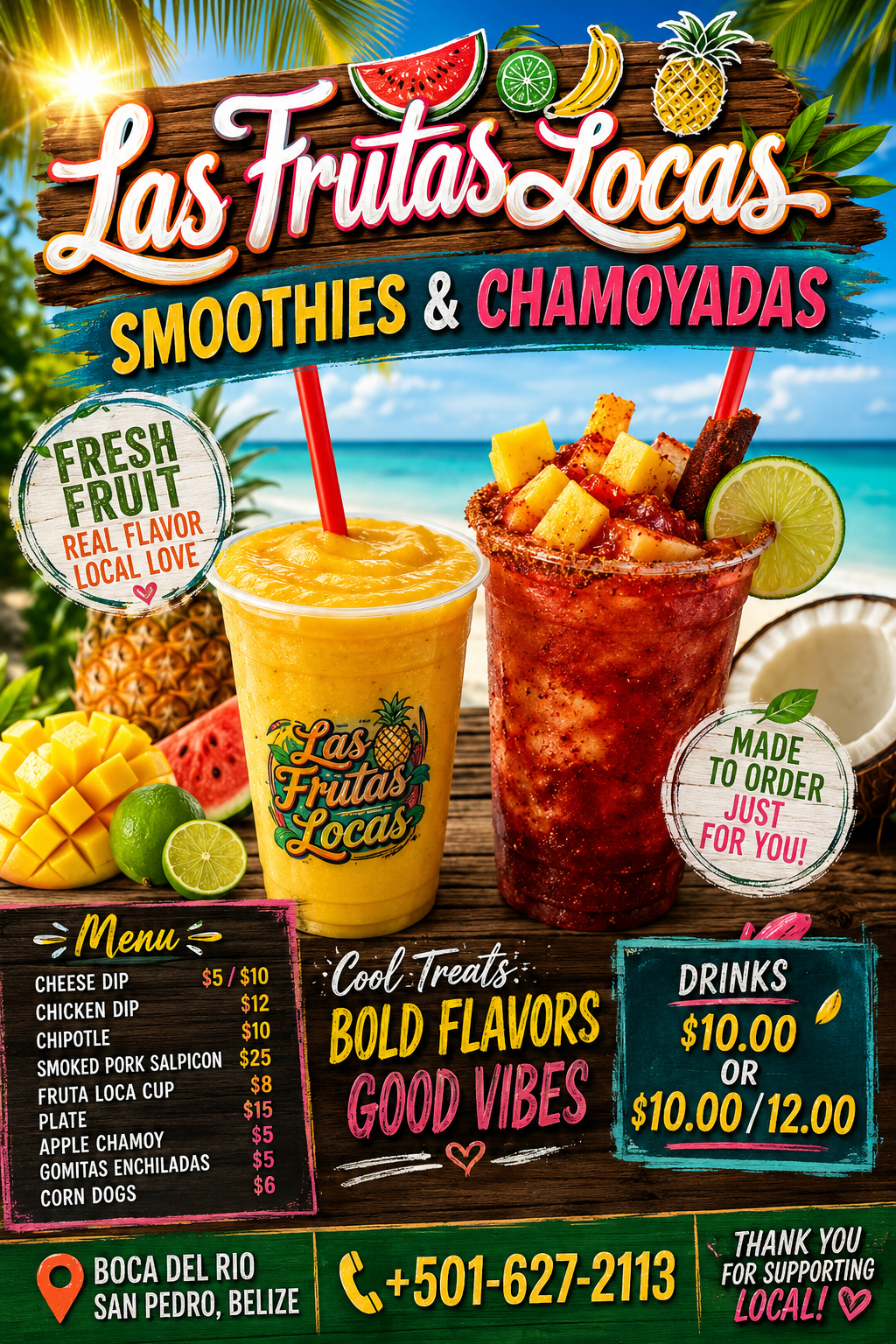
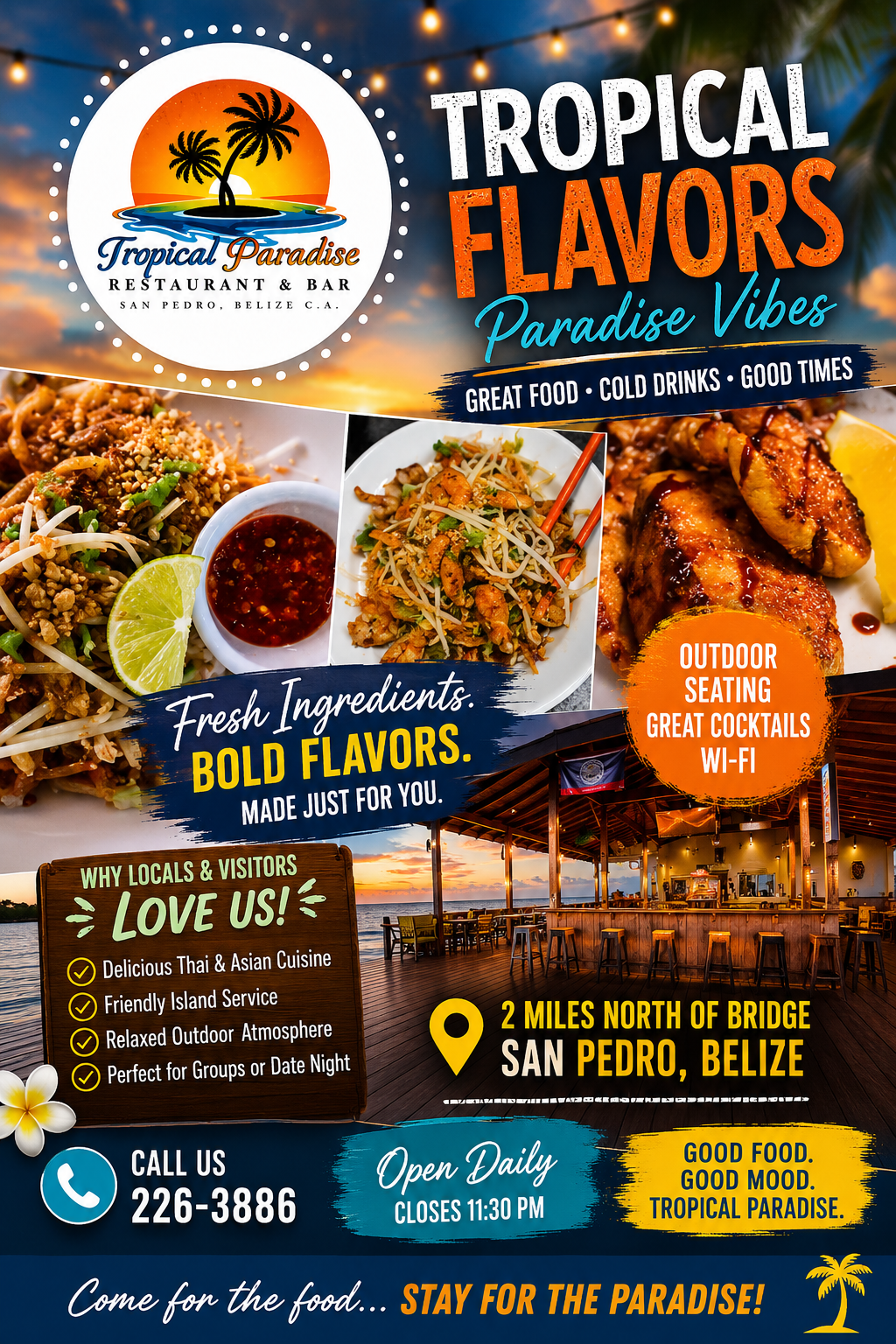
Own a restaurant, beach bar, food tour, or hotel in Belize? Get your spot in front of hungry visitors actively planning their trip. Featured reviews, image ads, and homepage placements available — built and managed by Eye To Ad Media.
Premium image-ad placement — limited spots per island. Ask about seasonal rates for Lobsterfest & high season.
Belize’s star seafood is seasonal and protected. Plan your cravings around the calendar.
Out of season, these are protected and shouldn’t appear on menus — if they do, that’s a red flag for sustainability. Off-season, lean into snapper, grouper, shrimp, and the country’s endless stews and street food. There’s never a bad time to eat well in Belize.
Belize is small but culturally expansive, wedged between Mexico to the north and Guatemala to the west and south, with a Caribbean coast facing the open sea. That geography wrote the menu. Northern towns lean Mexican, heavy on corn, masa, and the bright pickled flavors of Mestizo cooking. The southern coast belongs to the Garifuna, whose patient, coconut-rich dishes trace back to West Africa by way of the Caribbean. Inland, Maya communities keep the oldest traditions alive with corn, cacao, and game. And threaded through all of it is Creole cooking — the African, British, and Indigenous blend that most people mean when they simply say “Belizean food.”
What makes it cohere is generosity. A dish born in one culture becomes everyone’s before long. Rice and beans is Creole in origin, but it lands on every table in the country. Fry jacks are breakfast whether your family is Maya, Mestizo, Garifuna, or Creole. Ceviche shows up at every beach and every party, no matter who’s cooking. These shared plates don’t erase where they came from — they prove that when something is good enough, everybody makes it their own. Eating across Belize is really a tour through that exchange, one plate at a time.
The cooking itself rewards slowness and freshness over flash. Pots simmer for hours. Coconuts are grated and squeezed by hand. Hot sauce hits the table before the cutlery does, and nobody rushes you to leave. It’s flavorful without being punishingly spicy, built on fresh aromatics, just-caught seafood, and spice blends like recado that color a dish as much as they season it. Come hungry, eat slowly, and let the country feed you the way it feeds itself.
A few small things that make every meal smoother.
Many island and local spots are cash only. Belize dollars and US dollars both work, always at a fixed 2:1 rate. Cards often add a fee.
Service is warm and unhurried, especially on the cayes. You’ll often order at a counter, and no one will rush your table. Relax into it.
Customary in sit-down restaurants if service isn’t already included. Check the bill before adding more.
Belizean hot sauce is a beloved table fixture — habanero-forward and on every counter. Start light if you’re unsure.
The best home-style kitchens rarely advertise. Ask around for the best ceviche, pigtail, or hudut in town — locals love to point the way.
Small family kitchens often close one day a week, and hours shift in low season. A quick check before you walk over saves disappointment.
In Belize, food is a reason to gather. Time your trip around these and eat your way deeper into the culture.
Lobsterfest. The summer highlight for seafood lovers. As lobster season opens, San Pedro, Caye Caulker, and Placencia each throw multi-day celebrations with beach parties, live music, and vendors serving lobster every way imaginable — grilled, curried, in tacos, or drenched in buttery Creole sauce. If you’re visiting in June or July, build a few days around whichever island’s festival fits your route.
Garifuna Settlement Day. Each November 19, the southern coast around Dangriga and Hopkins comes alive with drumming, dancing, and traditional Garifuna cooking. It’s the best time and place to taste hudut, cassava bread, and coconut-rich stews the way they’ve been made for generations, surrounded by the culture that created them.
Chocolate & cashew festivals. The Maya gave the world cacao, and the Punta Gorda Chocolate Festival in the Toledo district celebrates that legacy with tastings, demos, and farm visits. Up north, the Crooked Tree Cashew Festival honors another local heritage crop. Both are wonderful excuses to explore the mainland’s food culture beyond the cayes.
Cooking classes and food tours. Some of the best meals you’ll have in Belize are ones you help make. Garifuna cooking experiences in Hopkins teach you to grate coconut and build hudut by hand. Cacao farms near San Ignacio and Toledo offer bean-to-bar chocolate experiences. And guided food tours in San Pedro and Placencia walk you from street stalls to hidden kitchens you’d never find alone. If you want to understand Belizean food rather than just eat it, these are the way in.
Start with the seasons. If grilled lobster is non-negotiable, aim for the June-to-February window; if you’re a ceviche devotee, the conch season runs October through June. Then pick your bases. The cayes — San Pedro and Caye Caulker — deliver the densest, most convenient dining and the classic beachfront seafood experience. The southern coast around Placencia and Hopkins rewards travelers who want awarded kitchens and authentic Garifuna cooking. Inland, San Ignacio opens up Maya flavors, market food, and chocolate.
Wherever you land, leave room for spontaneity. Some of the most memorable meals in Belize aren’t on any list — they’re the fry-jack stand with the morning line, the family kitchen a local insists you try, the dock-side ceviche you stumble onto at sunset. Use this guide as your backbone, keep your food bucket list handy, and let the country surprise you. And while you’re planning meals, it’s worth planning the rest of the trip too: pair your eating itinerary with the reef and rainforest by browsing Best Belize Adventures, Best Snorkeling in Belize, Things To Do in Belize, and Belize Fishing Charter. Come hungry, and you’ll leave with a few new favorites you won’t stop thinking about.
Straight answers to the questions travelers ask most about eating in Belize.
Own or manage a Belize eatery, beach bar, or food tour? Tell us about it — we’re always adding standout spots and advertising partners to the guide. Prefer to talk? Call or WhatsApp +1-720-249-6588.